01
Understand the site
Review drawings, access, utility information, ground conditions and the required finish before mobilizing.

Tiger Hills Construction
Delicate areas call for a deliberate approach. Protect the surroundings, get the installation right and restore the ground with care.
Care before the first bucket
Existing landscaping is more than something to move out of the way. Access routes, soil storage and the limits of excavation all affect how well a site can be put back.
We aim to return the landscape to its original condition, or as close as the site and agreed scope allow. That starts with understanding what is there and what must be protected.
The installation below ground and the finish above it deserve the same attention.
How we plan the work
Review drawings, access, utility information, ground conditions and the required finish before mobilizing.
Plan equipment movement, soil handling and the work area around the landscape and existing infrastructure.
Work through placement, conduit entries and elevations to the project requirements, with clear coordination between crews.
Backfill, compact, grade and clean up as part of completing the installation. Check the finish against the agreed scope.
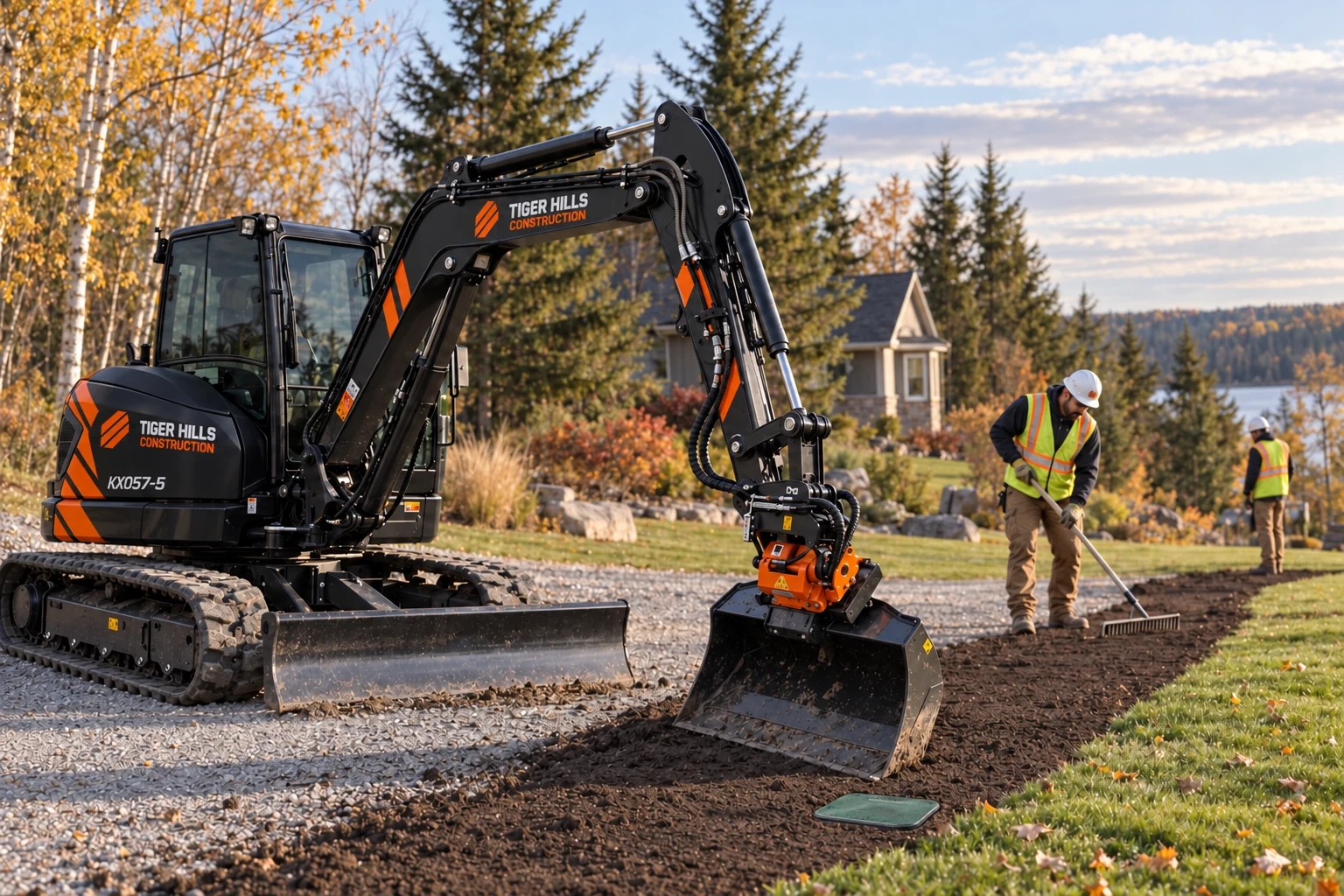
Leaving loose fill to settle is not our finishing plan. Appropriate backfill materials, controlled lifts and compaction belong in the work from the start.
What that means on site
Agree on access and working limits. Avoid treating the entire surrounding area as part of the excavation.
Follow the specified materials, lift thicknesses and compaction requirements, including testing when the project calls for it.
Confirm that the preceding work is ready, materials are available and any changes to the installation are resolved.
Agree on grades, topsoil, cleanup and landscape treatment. Identify seasonal work or follow-up requirements rather than leaving them unclear.
No. Soil conditions, drainage, weather and seasonal change can affect a finished surface. Our commitment is to plan and execute the backfill and restoration properly, rather than rely on settlement to do the compaction.
Utility information, required locates, exposure methods and site-specific controls need to be established before excavation. The work plan must reflect the actual site and the prime contractor’s requirements.
Define the installation, the access and the restoration before the equipment arrives.